Tesseracts, Quantumland, Cosmos
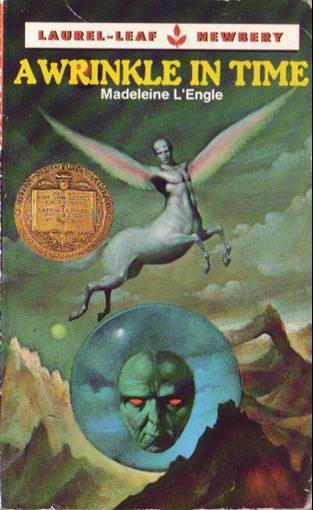
I re read for the dozenth time, A Wrinkle In Time by Madeleine L'engle. It is a short quick read, one that I loved as a kid and still enjoy reading today. It was published in 1962. According to a Wiki article, it was written between 1959-1960. It was rejected numerous times because it was considered too 'different' but eventually won several awards. Tesseracts are just too fun.

I've read but once a few of her other books. I wonder if they would still hold the same appeal. Perhaps one day soon I will wander over to the library and see of they are available to borrow.
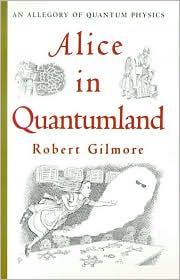
The reading of this book came from a need to read something quick moving and light. I've been reading though my old business books, some health information books and then the usual assortment of science, particularly physics/quantum physics books and magazines. I go a bit slower on the latter, because I find my mind wandering thinking about the subject matter and its implications. Whenever a friend is curious about the subject but does not know where to starts, I often recommend anything by Robert Gilmore, particularly, "Alice in Quantumland: an allegory of quantum physics". It provides the concepts through use of characters in a loose story line. I enjoy the visualizations of the story. Other books I have by him include, "The Wizard of Quarks: A Fantasy of Particle Physics", "Scrooge's Cryptic Carol: Visions of Time, Energy and Quantum Nature" and Once Upon a Universe: Not-So-Grimm Tales of Cosmology". Good stuff. Other recommendations are passed over with a glazed look on their face. oh well. haha
I've never gotten very far in the math arena, so I generally stay away from the mechanics. Although I have a feeling I would 'get it' if I tried. There is something appealing in numbers and formulas. I find myself often needing to reacquaint myself with classical physics. I often forget what something means, or it feels just out of reach in recollection. Not often am I in conversations that allow for the practice of concretely accommodating the information. But it is perpetually fascinating to me nonetheless.
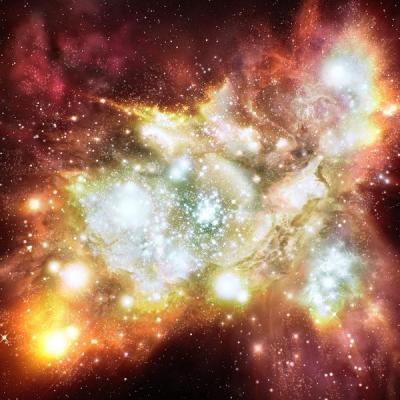
I'm working through the book "Cosmos" by Carl Sagan, after watching the Cosmos series on DVD recently (13 hour long episodes, done well and still relative despite it being produced back in 1980 and updates in 1990). The book follows along the old PBS series fairly closely, each chapter reading like an essay. I have the smaller paperback version, so there aren't as many pictures as the large book. One day that will be added to my collection- both the bigger book and the series. A recommended read (and viewing) for anyone curious about the cosmos.
I've read but once a few of her other books. I wonder if they would still hold the same appeal. Perhaps one day soon I will wander over to the library and see of they are available to borrow.
The reading of this book came from a need to read something quick moving and light. I've been reading though my old business books, some health information books and then the usual assortment of science, particularly physics/quantum physics books and magazines. I go a bit slower on the latter, because I find my mind wandering thinking about the subject matter and its implications. Whenever a friend is curious about the subject but does not know where to starts, I often recommend anything by Robert Gilmore, particularly, "Alice in Quantumland: an allegory of quantum physics". It provides the concepts through use of characters in a loose story line. I enjoy the visualizations of the story. Other books I have by him include, "The Wizard of Quarks: A Fantasy of Particle Physics", "Scrooge's Cryptic Carol: Visions of Time, Energy and Quantum Nature" and Once Upon a Universe: Not-So-Grimm Tales of Cosmology". Good stuff. Other recommendations are passed over with a glazed look on their face. oh well. haha
I've never gotten very far in the math arena, so I generally stay away from the mechanics. Although I have a feeling I would 'get it' if I tried. There is something appealing in numbers and formulas. I find myself often needing to reacquaint myself with classical physics. I often forget what something means, or it feels just out of reach in recollection. Not often am I in conversations that allow for the practice of concretely accommodating the information. But it is perpetually fascinating to me nonetheless.
I'm working through the book "Cosmos" by Carl Sagan, after watching the Cosmos series on DVD recently (13 hour long episodes, done well and still relative despite it being produced back in 1980 and updates in 1990). The book follows along the old PBS series fairly closely, each chapter reading like an essay. I have the smaller paperback version, so there aren't as many pictures as the large book. One day that will be added to my collection- both the bigger book and the series. A recommended read (and viewing) for anyone curious about the cosmos.