
 mobile
Category: drugs
03/14/09 01:23 - ID#48049
TV Article on Drugs
TV confessions unveil Guinea's narcostate identity
By RUKMINI CALLIMACHI, Associated Press Writer Rukmini Callimachi, Associated Press Writer - 41 mins ago
Ousmane Conte, son of Guinea Conakry's late president Lasante Conte, sits in AP - Ousmane Conte, son of Guinea Conakry's late president Lasante Conte, sits in detention at the gendarmerie ...
CONAKRY, Guinea - When planes loaded with cocaine arrived, Guinea's presidential guard secured the cargo. Drug deals were conducted inside the first lady's private residence and in the president's VIP salon at the airport. To avoid detection, cocaine was sent to Europe in the country's diplomatic pouch.
As the people of Guinea sit transfixed before their TV sets, top government officials one after another are confessing to their role in a lucrative international cocaine trade. Organized by a military junta that seized power three months ago, the confessions offer unprecedented insight into an exploding drug trade in West Africa, one that connects coca leaves grown in South American fields to cocaine in European discos.
The confessions paint a picture of an illicit trade conducted with total impunity, with the help of officials, members of the president's family and security forces. They also show the large role Guinea and other West African countries are playing as drug hubs, and how vulnerable they are to the corrupting influence of drug dollars.
A recent United Nations report found that at least 46 tons of cocaine have been seized en route to Europe via West Africa since 2005, bringing profits that sometimes exceed the entire defense budgets of countries it passes through. Before that time, less than a ton a year was seized from the entire continent.
"The vast majority of cocaine that is destined for Europe is now going through West Africa," said Michael Braun, who was the U.S. Drug Enforcement Agency's operations chief when he retired in October.
___
For years, the drug trade was an open secret in Guinea. The inner circle of former dictator Lansana Conte, who ruled Guinea for 24 years until his death, was deeply corrupt, with officials driving opulent SUVs in a capital where most people live without electricity.
Conte died in December. A day later, Capt. Moussa Dadis Camara, a junior army officer, grabbed power in a coup and promised to crack down on corruption, including on the flagrant drug trade. So far, more than a dozen people have been arrested, but Dadis has failed to arrest well-known members of his own military junta who are believed to deal in drugs.
The confessions began two weeks ago on state television in what is now known in Guinea as "The Dadis Show," broadcasts that have caused a spike in TV viewership and are the constant topic at lunch and over coffee.
First up was Ousmane Conte, the feared eldest son of the deceased dictator, who was untouchable under the previous regime. He admitted what everyone in Guinea knew but did not dare say.
"I acknowledge that I was in the drug business - and I regret it," said Conte, whose confession was taped inside his detention cell.
In a jailhouse interview this week with The Associated Press, Conte explained how he did it. He said a friend brought in "medicine" for his humanitarian foundation, using a Red Cross plane that landed at night at the international airport in the capital, Conakry. When the plane arrived, his friend called to wake him. Conte then went to the airport accompanied by the presidential guard to secure the cargo, he said.
Conte claimed he did not know at first that the cargo contained cocaine. But his friend later told him, he said, and Conte accepted a $300,000 bribe.
Other officials confessed to equally bold behavior.
The late president's brother-in-law said he met with Latin American drug dealers inside a villa owned by his sister, the former first lady. The head of the country's intelligence unit said he personally accompanied a convoy of trucks containing drugs to the capital. The former head of the police force was challenged to account for the source of funds for a university he is building.
Even the former head of the country's anti-drug unit was interrogated on state TV for his alleged role. The unit was in charge of seizing drugs when a cache was found. But instead of securing and destroying the drugs, the cocaine was often "recycled," said top police officials and foreign diplomats.
A junior police officer said that on one raid, they discovered a 40-foot container filled with cocaine wrapped in plastic. There was so much that the police could not load it all into the two pickup trucks they had brought, said the officer, who asked not to be named because he was committing a crime.
In the confusion, he said, he hid one of the plastic-wrapped sachets of cocaine inside his uniform. He sold it to a buyer at the port, who gave him $15,000. He bought a used car, a TV set and the latest generation Nokia cellphone. He also paid to send his mother, a Muslim, to Mecca in Saudi Arabia.
He's not proud of what he did, he said. But he pointed out that his theft was miniscule compared to that of his superiors, several of whom stole enough to buy themselves newly-imported Toyota SUVs.
"Eighty percent of the men in uniform lived off of this - it wasn't just me," he said. "It was everyone."
The anti-drug unit eventually gained such a reputation as a place for easy money that it began to receive transfer applications from other police departments, said current director Moussa Sakho Camara, who was brought in late last year after the former director was sacked.
Camara said that when he took over, a large number of officers drove imported SUVs - $50,000 cars that would have taken over 50 years to buy on an officer's $100-a-month salary. So, in an effort to stop officers from driving their drug trophies to work, Camara ruled that only he could park in the anti-drug unit's parking lot.
___
The drug business in Guinea feeds into a much larger trade that brings cocaine from South America into Spain and Portugal to serve a booming European market.
As the cocaine market in the United States matured, drug traffickers turned to Europe instead, according to a U.N. report released in October. Over the past decade, cocaine use in Spain and the United Kingdom has grown three and four-fold. One kilogram of cocaine in Europe now sells for twice as much as in the United States, according to the U.N. Office on Drugs and Crime.
To get the cocaine to Europe, traffickers first smuggle it to Africa's west coast, located directly across the ocean from Colombia, Peru and Bolivia, home to the world's entire crop of coca leaves. They bring it in freighter ships and in small, two-engine planes that land at night on deserted air strips. Once ashore, it is parceled out to hundreds of drug dealers, who smuggle it north on boats, in planes and in their own intestines.
In a report earlier this month, the U.S. State Department said cocaine smuggling through Venezuela alone has shot up fivefold since 2002, from 50 metric tons to an estimated 250 metric tons in 2007. It said a rapidly increasing percentage of the flow has begun to be shipped and flown to West Africa, notably to Guinea and Guinea Bissau, and then on toward Europe.
The countries dotting Africa's Atlantic Coast are so mired in poverty that their people - including the governing elite - are often tempted into the drug trade. Guinea alone was the embarkation point for 221 couriers detected since 2006, the single largest national total in the region, according to the U.N. report.
"Africa is under attack," says Antonio Maria Costa, who heads the Vienna-based U.N. Office on Drugs and Crime.
The biggest entry points in Europe are Spain, Portugal and the United Kingdom, but the trade is widespread. In Switzerland alone, the U.N. report noted, 60 percent of foreign drug traffickers arrested were West African.
It's unclear if the crackdown in Guinea will succeed in dislodging the cartels. Even if it does, experts say, the trade will simply move to neighboring countries.
Next door is Sierra Leone, where last June a Cessna piloted by a three-man crew from Latin America was stopped with 700 kilograms of cocaine. To the north is Guinea-Bissau, from where in 2006, 32 people carrying cocaine boarded the same flight for Amsterdam's Schiphol Airport.
But already, the people of Guinea are realizing how much their economy depends on drugs.
Nigerians who acted as go-betweens in the drug trade used to spend freely in Guinea, but they are now gone. Business is down at the capital's discos, where the Nigerians used to order multiple rounds of drinks. For Guineans, a bottle of champagne is worth three months' salary.
Their apparent departure is also being felt at a downtown intersection, where a 14-year-old boy sells telephone charge cards. "Before, selling cards worked. The Nigerians would buy 10 at a time," said Mamadou Diallo. "Now I'm hardly selling any."
There are fewer SUVs, and those who drive expensive cars feel they have been put on notice.
The police officer who admitted to stealing cocaine said he now takes public transport to work. He answers his calls on a beat-up Nokia, and handed over the new one he bought with the cocaine money to his girlfriend.
"Everyone knows that a Guinean can't afford these things," he explained, his knees twitching under the table. "Everybody is afraid. No one could have imagined that they could arrest these people."
____
Associated Press Writers Veronika Oleksyn and Bill Kole in Vienna, Frank Bajak in Bogota, Paul Haven in Madrid, Barry Hatton in Lisbon and Clarence Roy-Macaulay in Freetown, Sierra Leone, contributed to this report.


Permalink: TV_Article_on_Drugs.html
Words: 1772


Category: drugs
04/21/08 06:24 - ID#44089
420 and stuff






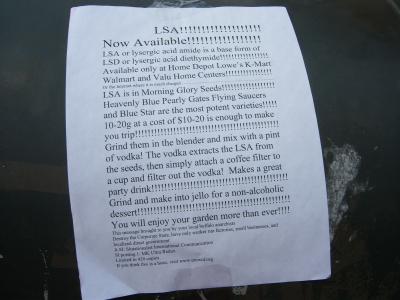

For those that don't know I'm not for decriminalising weed. I think it should be made legal and sold in stores with smokes but that companies can't add all the stuff that they ad to cigs. Then you can tax places that grow it, importation and the sales and use a certain percentage of that tax to go into education (real facts not propoganda and lies) and into rehab for people that want it. I don't think that will ever happen because the Beer and "Smokes" company poor a lot of money into the campaign Against drugs, not to mention all the legal drug companies that could lose out if weed and other drugs became legal.
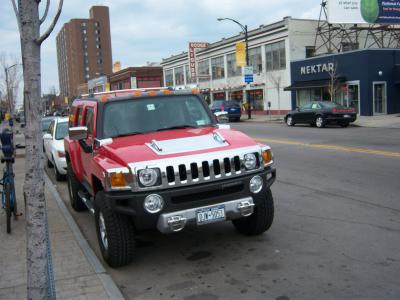
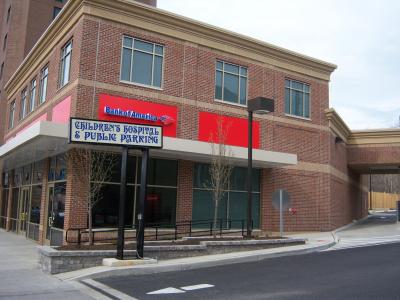
Here are some pictures of the Blue Cross & Blue shield building.
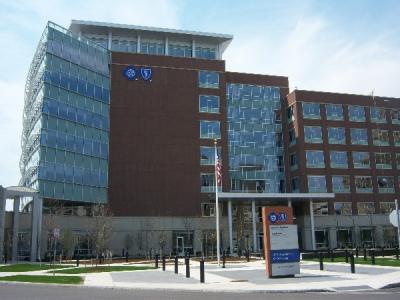
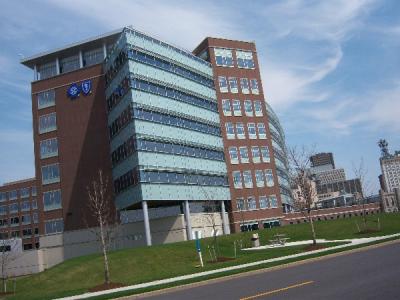
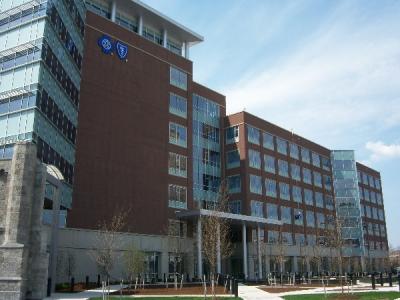
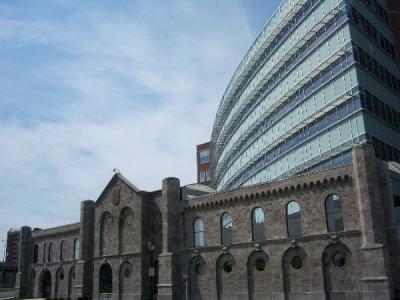
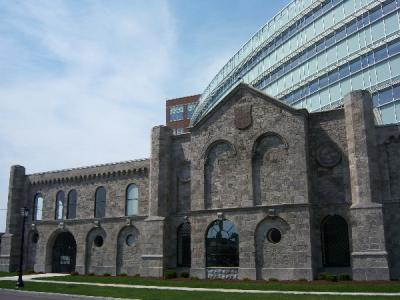
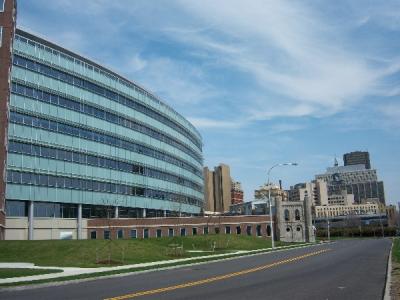
I hope people are enjoying this lovely weather because I'm guessing soon a lot of us will have the air conditioners on and complaining that it is to hot or that it is raining all the time I'm going with the hot.


Permalink: 420_and_stuff.html
Words: 390
Category: drugs
02/25/08 05:58 - ID#43458
Oakland Marjiuna Colleger
Oakland school turns out pot club pros
By LISA LEFF, Associated Press Writer 43 minutes ago
OAKLAND, Calif. - You know you're in a different kind of college when a teaching assistant sets five marijuana plants down in the middle of a lab and no one blinks a bloodshot eye.
Welcome to Oaksterdam University, a new trade school where higher education takes on a whole new meaning.
The school prepares people for jobs in California's thriving medical marijuana industry. For $200 and the cost of two required textbooks, students learn how to cultivate and cook with cannabis, study which strains of pot are best for certain ailments, and are instructed in the legalities of a business that is against the law in the eyes of the federal government.
"My basic idea is to try to professionalize the industry and have it taken seriously as a real industry, just like beer and distilling hard alcohol," said Richard Lee, 45, an activist and pot-dispensary owner who founded the school in a downtown storefront last fall.
So far, 60 students have completed the two-day weekend course, which is sold out through May. At the end of the class, students are given a take-home test, with the highest scorer - make that "top scorer" - earning the title of class valedictorian.
Before getting to Horticulture 101, the hands-on highlight of Oaksterdam U, the 20 budding botanists, entrepreneurs and political activists at a recent weekend session sat politely through two law lectures and a visiting professor's history talk.
In the lab, Lee measured plant food into a plastic garbage can and explained how, with common sense, upgraded electrical outlets, a fan and an air filter, students can grow pot at home for fun, health, public service - or profit.
Lee explained to his students how to prune and harvest plants, handing the clipping shears to a woman who wasn't sure how close to the stalk to cut without damaging it. He offered his thoughts on which commercial nutrient preparations are best, as well as the advantages of hydroponics, or soil-free gardening.
During a discussion of neighbor relations, he warned against setting boobytraps to keep curious kids out of outdoor gardens.
Students gave various reasons for enrolling. Some said they were simply curious. Others said they wanted tips for growing their own weed, although judging from the questions, a few were ready for the graduate seminar Lee recently added to the curriculum.
Jeff Sanders, 52, said he has been buying medical marijuana since 2003, but wants to open a dispensary in the San Joaquin Valley because he doesn't like having to drive up to San Francisco and paying the markup.
"I see it as a good thing. You are giving back to the community," Sanders said.
Patrick O'Shaughnessy, 37, said he started smoking pot regularly for the first time about a year ago to treat his chronic migraines, depression and anxiety. After attending class, he said felt more confident about growing his own, which he wants to do because the dispensary he frequents often sells out of his favorite strain.
Oaksterdam U draws its name from the jokey nickname for a section of Oakland where some of California's earliest medical marijuana dispensaries took root. The nickname in turn was inspired by the city of Amsterdam, in Holland, where pot use is tolerated.
At one point, the Oaksterdam neighborhood had at least 15 clubs and coffee shops selling pot, a number that dwindled to four when the city started issuing permits and collecting taxes from them a few years ago.
California was the first of a dozen states that have legalized marijuana use for patients with a doctor's recommendation. Despite periodic raids by federal drug agents and the threat of prosecution, clubs and cooperatives where customers can buy the drug of their choice have proliferated; California has 300 to 400, according to advocacy groups.
Entry-level workers are paid a little more than minimum wage, while "bud tenders," can make over $50,000 a year, and owners and top managers more than $100,000, Lee said. But there's also a certain amount of risk - and not just financial, but legal.
Michael Chapman, an assistant agent in charge with the Drug Enforcement Agency's San Francisco office, said authorities are aware of Oaksterdam U and don't see any reason to shut it down. Talking about marijuana is not illegal, and while a small amount of pot is kept on the premises, the DEA tries "to concentrate our case work on the most significant violators," he said.
Still, Chapman said he doesn't like Lee's effort to wrap cannabis education in a cap and gown.
"I think they are sending the wrong message out to the community and it's something that could only facilitate criminal behavior," he said.
I just thought of something else. Does anyone know if for the medical stuff you can cross pollenate. The reason I wonder is that there are weeds that (from what I heard) have been crosspollenated so they kinda taste like apple or peach as in Peach Melba. I wonder where I could find that on line, maybe for fun I should look that up. If the DEA raids me more looking stuff up you'll know when I'm not online for two weeks. I wonder when the Medical stuff will go to the supreme court. It seems like if a state says it is legal the feds can't say it is illegal that violates the Constituiton or maybe if it is allready that way then the states can't make it legal. If it ever goes or goes again (more research for if I ever have the free time) I hope the states win.
Permalink: Oakland_Marjiuna_Colleger.html
Words: 1033
Category: drugs
01/30/08 03:59 - ID#43095
Legal Marijuna
Vending machines dispense pot in LA
By DAISY NGUYEN, Associated Press Writer Wed Jan 30, 8:47 AM ET
LOS ANGELES - The city that popularized the fast food drive-thru has a new innovation: 24-hour medical marijuana vending machines.
Patients suffering from chronic pain, loss of appetite and other ailments that marijuana is said to alleviate can get their pot with a dose of convenience at the Herbal Nutrition Center, where a large machine will dole out the drug around the clock.
"Convenient access, lower prices, safety, anonymity," inventor and owner Vincent Mehdizadeh said, extolling the benefits of the machine.
But federal drug agents say the invention may need unplugging.
"Somebody owns (it), it's on a property and somebody fills it," said DEA Special Agent Jose Martinez. "Once we find out where it's at, we'll look into it and see if they're violating laws."
At least three dispensaries in the city, including two belonging to Mehdizadeh, have installed vending machines to distribute the drug to people who carry cards authorizing marijuana use.
Mehdizadeh said he spent seven months to develop and patent the black, armored box, which he calls the "PVM," or prescription vending machine.
A sliding fence protects the tinted windows of his dispensary, barely distinguishing it from a busy thoroughfare of strip malls, automobile dealers and furniture shops. A box resembling a large refrigerator stands inside the nearly empty shop, near a few shelves stocked with vitamins and herbs.
A guard in a black T-shirt emblazoned with the word "Security" on the front stands at the door. A poster of Bob Marley decorates a back room.
The computerized machine requires fingerprint identification and a prepaid card with a magnetic stripe. Once the card and fingerprint are verified, a bright green envelope with the pot drops down a slot.
Mehdizadeh says any user approved for medical marijuana and registered in a computer database at his dispensaries can pre-purchase the drug and then use the machine to pick up.
The process provides convenience and privacy for users who may otherwise feel uncomfortable about buying marijuana, Mehdizadeh said.
At the Timothy Leary Medical Dispensary in the San Fernando Valley, the vending machine is accessible only during business hours. An employee there said the machine was introduced about five months ago, and provides speedy service.
"It helps a lot of patients who are in a lot of pain and don't want to wait around to get help," Robert Schwartz said. "It's been working out great."
Mehdizadeh said he sought the advice of doctors, and decided to limit the amount of marijuana per user to an ounce per week. Each purchase from the machine yields 1/8th or 2/8th of an ounce. By eliminating a vendor behind the counter, he said, the machine offers users lower drug prices. The 1/8th ounce packet would cost about $40 - $20 lower than the average price at other dispensaries.
A spokesman for a marijuana advocacy group said the machine also benefits dispensary owners.
"It limits the number of workers in the store in the event of a raid, and it'll make it harder for theft," said Nathan Sands, of The Compassionate Coalition.
Marijuana use is illegal under federal law, which does not recognize the medical marijuana laws in California and 11 other states.
The Drug Enforcement Agency and other federal agencies have been actively shutting down major medical marijuana dispensaries throughout the state over the last two years and charging their operators with felony distribution charges.
Mehdizadeh said the Herbal Nutrition Center was the target of a federal raid in December. He said no arrests were made and no charges have been filed against him.
Kris Hermes, a spokesman for advocacy group Americans for Safe Access, said the machine might benefit those who already know how much and what strain of marijuana they're looking for. But he said others will want to see and smell the drug before they buy it.
A man who said he has been authorized to use medical marijuana as part of his anger management therapy said the vending machine's security measures would at least protect against illicit use of the drug.
"You have kids that want to get high and that's not what marijuana is for," Robert Miko said. "It's to medicate."
Permalink: Legal_Marijuna.html
Words: 842
Category: drugs
11/01/07 05:48 - ID#41924
Club Owner drug bust?
The Buffalo News : City & Region
Thursday, November 1, 2007
Jesse S. Zuefle, owner of Club Diablo on Washington Street, pleaded guilty Tuesday to a reduced felony charge in connection with last spring's seizure of 42 pounds of marijuana in the attic of the rental property he owned next door to his Richmond Avenue home.
In return for the plea, prosecutors ordered Zuefle, 36, to turn over cash seized in the raid to the federal and state authorities, along with a vehicle used in his marijuana business and the three-story building where the drugs were found.
Zuefle has been free on bail since the May 10 raid by the Erie County district attorney's office, the State Police and federal Immigration and Customs Enforcement. He pleaded guilty before State Supreme Court Justice Russell P. Buscaglia to first-degree attempted criminal possession of marijuana.
Zuefle is free on $10,000 bail pending his Jan. 4 sentencing.
Initially charged with first-degree criminal possession of marijuana - which carries a possible state prison term of up to 5z years - Zuefle now faces a sentence ranging from probation to 2z years in prison.
After the plea proceedings, narcotics prosecutor Glenn Pincus of the district attorney's office said authorities seized $150,000 in cash plus the marijuana and drug scales.
Under the plea deal, the cash, the property that was "the basis of his marijuana operation" and a Chevrolet TrailBlazer he used in the marijuana business will be turned over to and shared by the state and federal governments, Pincus said.
The raid was the result of a yearlong investigation by the three agencies, Pincus said.
Zuefle was allowed to plead guilty to a lesser felony charge because of his agreement on the confiscation of the cash and property, which have a combined value of about $250,000, and his previously clean record, Pincus said. His ownership of Club Diablo was not a part of the case.
U.S. Attorney Terrance P. Flynn said the seizure of Zuefle's property "should send a strong message to those individuals who believe that trafficking in marijuana is not a serious problem."
"Not only will this forfeiture action remove the money Zuefle made from his illegal business, but it also addresses the concern of his Richmond Avenue neighbors that should not have to be forced to live near an apartment building that was used as an illegal distribution center," Flynn said.
Flynn said a federal forfeiture complaint is now before U.S. District Judge Richard J. Arcara.

Permalink: Club_Owner_drug_bust_.html
Words: 457
Category: drugs
09/16/06 03:56 - ID#28463
Lost war on drugs
What upsets me about the war on drugs is that the entire aproach is wrong. The cops arrest drug dealers and a new one pops up. You can't arrerest them as quickly as someone else comes along, it dosn't work. They are trying to fight the symptoms instead of the problem. People who use drugs are going to use drugs taking away a dealer isn't going to stop that. So what you wind up doing is sending people to Jail and over crowding jails. There is a big business in prisions that I may get to latter in this post. Basicly the government spends a lot of money locking people up and paying police to fight this war and sending cops into a war zone.
But if you fight drug use the other way you are much better off. Use the money to help people who want to stop using drugs to stop. Why do people start using drugs in the first place? I say it is to deal with life. Now when it is with alcohol that is ok but weed, coke, or Herion is ok? I say spend the money to help people how to deal with life so they don't need to use any drugs. Will there still be people who use drugs and become addicts, of course. But anyone who wants drugs can get drugs so we might as well try to make it so as few people as possible need drugs to deal with things.
You are not an addict be diffention untill what you are addicted to starts to interfear with other things. I have never understood that and kinda disagree a little bit. If you have two beers a day and have to have those 2 beers a day you are an addict just a responible one. But that being some of the money that is being poured into a loosing war on drugs could be used to figure out why some people can use drugs like weed or special K to party and not get addicted and some people then have to have there drug of choice. Wouldn't it be cool if you could pop a pill and it would get rid of the addicting quality of Pain Killers or even make painkillers that arn't addicting.
I belive that none of this will ever happen because secertly there are way to many people who make a lot of money on the war on drugs. The cops have a lot more to do when figting drugs and need that overtime pay. The prison system is verry big business. You have the company that builds it and other companies you supply pipes and eletric supplies. After building some one supplies food, uniforms, vechiles and all sorts of things. Not sure if it is true anymore but prisons used to count towards an areas population, that ties into how much money they get. Then there are the prision guards and prision workers who all get paid. Granted all people in jail are not drug dealers, drug users or people who stole for drugs but they do make up a lot of them. Prisons are a big business that a lot of companies make a great profit off of.
One thing that i find strange is that you have gangs who kill over drug turf. You would think that if these gangs didn't kill eachother and innocants that the cops would be less likely to go there and kick in doors. If drug dealers didn't except things like for dope that would also keep the cops away. If no ones houses are being broken into and there is no shoting or stabing or robing then the cops have no reason to come there. These gangs only happen in the inner city. You never hear about drug shoot outs in the suburbs. Are there drug houses out there? Or is that just an inner city thing? To be honest I don't know. I know that kids from good niehboorhoods and the burbs get and do drugs but not sure where they buy them.
I think that if you take the criminal aspect out of drugs things would be a lot better. It being criminal is why you gangs have turf wars and cops get killed and drug deals go bad. But then what about kids who qucikly figure out that they can leave school and sell dope all day and make more money then working a Job? I say that is a dam shame. But when you are part of the underclass in this country that is verry true. Just because you are from the underclass dosn't mean you have to sell drugs but it sure is tempting. I truely belive that there are a lot of rich people who want the underclass to stay as the underclass. I think that the rift between the rich and the poor is much wider then the one between white and blacks have ever been. I think a lot of big buiness dosn't care about the underclass as long as they buy there product. 40oz Beer is a great example that is a lot of fucking beer. You used to only be able to find them in stores in the ghetto. That was on purpose to pray on the poor. Those rent to own places is another good example. They take a $600 item and make it worth around double the price. But do they do lay a ways no. You rent it from them long term. Short term would be differant. Its the superbowl and your having a party but you don't have the money for a TV that covers the wall. I figured out the payments once and it was about 3 times the amount of the Value they listed on the TV. Not to mention that they allready inflated the value. The company dosn't care they are just there to pray on the poor and make their money and keep the poor that way.
If there where white suburban crack houses then who knows maybe the war on drugs might work, but it is still the wrong approach.
Here is where I get to the ify part. What if you decrimalise drugs? I think that would be good cause you could spend the money on trying to get people not to use drugs in stead of arresting people. It would help cut down on some of the violance in the drug wars. But the people selling them still want the most profit they can get so there still might be gang warfare.
I think Weed definatly and Cocaine should definatly be made legal. They would be sold in drug stores only and would be controled like alcohol and cigerettes. Yes now that it is legal you might get a few more people who want to try them but you would have the money you warn't putting into the war on drugs and new tax money for drug education and life coping skills and rehab centers. That would cut down on drug users. The people who where bringing the drugs in from other countries would now be the suppliers. They would make more money doing it this way so that would insure they wouldn't let any of it get onto the streets. When prohibtion started it caused gangs to form and government eventually wised up and ended it they really need to do the same thing now. I have heard a lot of theroies about why drugs won't be legalised. For example the cotton industry dosn't want Hemp clothes to compete with it. The government can't figure out how to tax it and keep the drugs out of street deelers hands. I have heard that legal perscription drug companies know there product is abused and dosn't want the competion.
What I know for sure is that the war on drugs is a battle we lost a long time ago and someone in government needs to start a differant aproach. It dosn't help that most politicans arn't from the ghetto or don't know about the ghetto and all the problems there. It also dosn't help that some of them know and could care less. Not sure if it is because of race or money. I understand that there will always be be some verry rich people and some verry poor people it is just to bad that some rich people try to keep it that way. If this wasn't true then why isn't there a drug war with the rich and connected and in the suburbs. Hopefully I'll hear some others thoughts on this. Oh yeah not really sure if herioin should be legal at all that is from what I've heard one of the most devestating drugs around. Maybe if I get more info I'll form an opion on meth labs.

Permalink: Lost_war_on_drugs.html
Words: 1567
Author Info
Date Cloud
- 06/16
- 12/15
- 11/15
- 07/15
- 06/15
- 05/15
- 03/15
- 02/15
- 01/15
- 12/14
- 11/14
- 08/14
- 07/14
- 06/14
- 05/14
- 04/14
- 03/14
- 02/14
- 12/13
- 11/13
- 10/13
- 09/13
- 08/13
- 07/13
- 06/13
- 05/13
- 04/13
- 03/13
- 02/13
- 01/13
- 12/12
- 11/12
- 10/12
- 09/12
- 08/12
- 07/12
- 06/12
- 05/12
- 04/12
- 03/12
- 02/12
- 01/12
- 12/11
- 11/11
- 10/11
- 09/11
- 08/11
- 07/11
- 06/11
- 05/11
- 04/11
- 03/11
- 02/11
- 01/11
- 12/10
- 11/10
- 10/10
- 09/10
- 08/10
- 07/10
- 06/10
- 05/10
- 04/10
- 03/10
- 02/10
- 01/10
- 12/09
- 11/09
- 10/09
- 09/09
- 08/09
- 07/09
- 06/09
- 05/09
- 04/09
- 03/09
- 02/09
- 01/09
- 12/08
- 11/08
- 10/08
- 09/08
- 08/08
- 07/08
- 06/08
- 05/08
- 04/08
- 03/08
- 02/08
- 01/08
- 12/07
- 11/07
- 10/07
- 09/07
- 08/07
- 07/07
- 06/07
- 05/07
- 04/07
- 03/07
- 02/07
- 01/07
- 12/06
- 11/06
- 10/06
- 09/06
- 08/06
- 07/06
- 06/06
- 05/06
- 04/06
- 03/06
- 02/06
- 01/06
- 12/05
- 11/05
- 10/05
- 09/05
- 08/05
- 07/05
- 06/05
- 05/05
- 04/05
- 03/05
- 02/05
- 01/05
- 12/04
- 11/04
- 10/04
- 09/04
- 08/04
- 07/04
- 06/04
Category Cloud
- advertising
- art
- body art
- buffalo
- comedy
- concerts
- drugs
- elmwood
- entertainment
- estrip
- event
- events
- food
- freedom
- hockey
- holiday
- holidays
- internet
- issues
- lax
- life
- movies
- music
- news
- nfl
- nhl
- olympics
- party
- peterazzi
- philosophy
- photos
- politics
- poll
- potpourri
- sex
- slideshow
- sports
- summer
- travel
- tv
- wedding
- wishes
- work
More Entries
My Fav Posts
- This user has zero favorite blogs selected ;(
 Buffalo Pride weekend marathon
 Raggedy Annie Plushapalooza '96
