
 mobile
Category: religion
02/04/09 11:24 - ID#47631
A good quote.
saving words anymore.
The old words fail and fall silent,
and our Christian life consists only
of prayer and trying to do the right thing.
It is not for us to foretell the day,
but the day will come
when some are called
to utter the word
of God
in such a way
that the world is changed and renewed.
There will be a new language,
perhaps quite unreligious,
but liberating and saving,
like the language of Jesus,
so that people are horrified by it,
and yet conquered by its power,
the language of a new truth,
the language that foretells the peace
of God
and the coming
of the Kingdom.
Dietrich Bonhoeffer
Letters and Papers from Prison


Permalink: A_good_quote_.html
Words: 127


Category: religion
12/24/08 11:02 - ID#47168
Stille Nacht


Permalink: Stille_Nacht.html
Words: 17
Category: religion
12/18/08 11:00 - ID#47098
Purpose Driven Life
(e:jim) had a reaction against the Purpose Driven Life, a book by Rick Warren:

This quote was singled out in particular:
This spiritual servitude only has negative connotations in a culture that is obsessed with asserting the rights of the individual. Civil rights, human rights, gay rights, minority rights-we hear about this constantly. Instead of asserting our rights-even if we have the freedom to do so-we are choosing to set them aside for a greater thing: the opportunity to serve the living God. What are you setting aside in order to serve God?
I believe that Rick Warren here is right, but incompletely right, and wrong, but incompletely wrong. I will explain.
Christians are called to put others ahead of themselves, and to put God's will ahead of theirs. Because we are often selfish, this is good for the world, and good for us (when we actually try it, but that's another post).
We get this idea, of course, from Jesus. We believe that Jesus had every authority, every "right" and yet refused to assert those rights violently. He gave up his rights, and suffered, even though he was innocent.
And Christians are called to follow his way.
But that doesn't mean that Christian blacks had to be content with seperate and unequal. When Dr. King organized the Bus Boycott, he asserted the right to ride the bus by NOT riding the bus. Christianity, done right, exposes the selfishness of the systems of this world for what they are. In Selma, that meant that police were trying to FORCE men and women onto the bus.
So we do assert our rights, as individuals and as a group--Warren is wrong when he implies that Christians cannot be involved in standing up for individual/minority rights. But it's NOT about asserting our rights. It's about giving up our rights for others.
The biggest problem with the civil rights movement wasn't the actions of black Christians, it was the silence of white Christians. We stood by (for the most part) and refused to give up our rights for others. Comfortable silence is un-Christian. "That's their problem" is un-Christian.
So Warren is right that it isn't about us. But he removes the speck from the eyes of minority Christians, and (in this quote) forgets to mention the efforts of white (mostly) Christians to protect their rights to put up the 10 commandments, pass laws, avoid taxes, or whatever.
Now Warren, though he is far from perfect. DOES give up much of his rights. He never sees 90% of the money he makes, because it goes straight to Africa. Think about that before you criticize to harshly, because at the very least, the man is committed. How many other New York Times Best Selling Authors live in little houses in the city? While I would love to be able to give as much as he does, I might buy a nice car or cable tv first. Warren puts his money where his mouth is.
So he's right: We are supposed to give up our rights, but incompletely, because he didn't hit the "sacred cows" of the rights of majority Christians.
And he's wrong: We can and do and should assert our rights (Jesus did), but at least he not completely wrong, because the ironic way of claiming our rights is to lose them in public ways that expose the foolishness of those who take them.



Permalink: Purpose_Driven_Life.html
Words: 580
Category: religion
11/07/08 12:07 - ID#46580
Suffering
Suffering may be accepted as a way, but I must speak carefully. So, some caveats:
1. No way of living should be imposed, but this one definitely should not.
2. Suffering in itself should not be seen as an end, or even a means of repentance, as seen here:http://en.wikipedia.org/wiki/Redemptive_suffering
Still, Christ said, "If anyone would come after me, he must deny himself and take up his cross and follow me. " (Matthew 16:24, please excuse the non-inclusive language). When living differently than the rest of the world, even if it is for the good of the world, one might expect to suffer. Again, this does not mean that suffering should be sought out, but the fact remains that Jesus was executed by the state, as were many of his followers. Christianity, practiced faithfully, is not good for empire.
Instead, we should be living in community with those who are suffering already, and thus, bearing another's burdens. There is already enough suffering in the world that we do not have to seek out/create government persecution, or practice self-mortification. We can enter into the suffering of others.
This, oddly enough, is what compassion means literally. "Passion," as we learned from passion plays and that movie, means suffering, and com- as a prefix means "with." Compassion = suffering with. A way of compassion is a way of suffering.
Christianity works from beneath (or at least it is supposed to) rather than stand on a pedestal or shout from a distance, we are called to enter into the brokenness of the world, as our leader did. Another key bible verse (Philippians 2:5-8):
Let the same mind be in you that was in Christ Jesus, who, though he was in the form of God, did not regard equality with God as something to be exploited, but emptied himself, taking the form of a slave, being born in human likeness. And being found in human form, he humbled himself and became obedient to the point of death- even death on a cross.


Permalink: Suffering.html
Words: 350
Category: religion
11/06/08 09:34 - ID#46569
More religion and Science.
for back story.I am having a hard time talking about "religion" in the abstract, so I will be concrete, specific, and personal. This isn't intended to be a defense of religion, but rather an explanation of why my particular faith is important to me.
It's important to me, because it is a counter-narrative that creates a counter-community in a world that is full of lies.
"Lies?" you say. "Yes--lies."
Advertising tells me that I am not ok the way that I am, but that buying a certain product will make me ok--and it invariably does not.
Government tells me that other people (gays, terrorists, immigrants, stock brokers, religious people) are the source of my problems. Often, the proposed solution is violent defeat. The idea that violence will produce peace is another lie that is common in this world.
Other things promise to give me value, and fail. Sex, popularity, food, power--whatever it is that entices, it mostly does so with lies.
Now, those of you that know me know that there is nothing wrong with any of these things in and of themselves. Some of them (most of them?) I like quite a bit! But they can and do lie to you.
In the person of Jesus, I see one who did not live according to the lies. In fact, he exposed them for what they were, and created a counter-community that loved the enemy, received violence without returning it, and found value not in consuming resources, but in distributing them.
I need these stories, and the experience of the presence/love of God that goes with them to resist becoming a part of the system of lies that I outlined. There may be other ways, and if you are on a different one, that is fine with me, but this is what frames and shapes my life. I don't think I could be who I am without the grace of God in my life, and (for the most part) I like who I am and who I am becoming.
When I think about it, Tiny, you seem to experience science in similar ways. You live differently than others, because you have tested your experience.
I guess what is sad is that too many people live with bad science/religion or no science/religion, and just believe what they are told.
(e:jim), upon further reflection, I think you are on to something--much of religion's problems come because we have refused to respect limits. Now, this is tricky for me, because I don't believe in compartmentalizing my faith to only a part of my life--a hobby that I do sometimes and ignore others--it is a way of life.
But on the other hand, it cannot speak with authority over others not practicing that way. We overstep our limits when we generalize the conclusions that have worked for our community to other individuals/situations. While I may accept suffering as a way for myself, it is quite another thing to impose it on another.
Yet, for me, even staying within limits is a religious value--Jesus never took power "over" another, and encouraged his followers to focus on dealing with their own sin, rather than those of others.
Maybe that's enough for now. Just one postscript:
@(e:paul) I hate being a snotty child, but here's my kid-like remark: (e:heidi) and (e:tinypliny) started it! Seriously though, I thank you for creating this tolerant community, where different ideas can be discussed. I am not sure I would have been able to make friends with so many different people without (e:strip), and I am better for the experience.


Permalink: More_religion_and_Science_.html
Words: 629
Category: religion
10/23/08 02:39 - ID#46279
James Dobson: huh?
Now, however, he is praying that God intervenes so that McCain wins.
Now, I'm all for divine intervention. In fact, I think we need it. But why should I ask God to elect somebody that I stated I wouldn't?
You can't have it both ways. If a person is such a leader that you ask God to install them supernaturally, than the least you can do is vote for them yourself.
Tony Campolo said that mixing politics and religion is like mixing ice cream and horse manure. The manure doesn't get changed much, but nobody wants to eat the ice cream!
Coming soon (it's been a while): 10 Things I like about Tony Campolo.


Permalink: James_Dobson_huh_.html
Words: 149
Category: religion
10/11/08 11:31 - ID#46071
More on Religulous
no....see what you failed to mention, and what i think was the most important and MAIN point of the movie is that it is calling for us non-religious, atheist people to get off our ass, stop being so ambivalent and passive....and start taking control and action against religious majority who are basically running this world into the ground.
he said that we are the BIGGESTY minority (compared to blacks, muslims, jews, asians) in the country, yet we have no power, no voice, no agenda, no support and no recognition.
Is this really the point of the movie? Because if it is, I've got some issues.
But first, let me clarify what my issues AREN'T:
I don't want theocracy.
I'm not anti-science.
I don't want any special privilege for me or others that share my faith.
I don't have anything against atheists (To be honest, I often prefer their company).
Issue number #1. Does Maher really want atheists to "take control" and/or take "action against" the religious? Isn't that what the problem has been with religious people is in the first place? (that we take control of others and act against them?) Is his argument really that atheists must become more like religious people by imitating our most negative characteristic?
The power practiced by religious people over other people is a huge problem, but is the solution for other people to take power in the same manner? I hope not. This has not gotten us anywhere.
Issue #2. Does Maher really believe that atheists should have greater power because they are a smaller minority? This doesn't make sense to me, and even if it WAS logical, it still wouldn't be a productive argument.
Before I explore how it doesn't make sense, I have to point out that it really doesn't matter, as his assertion isn't true. Sure, there are less atheists in the the USA then there are Asians, or Jews, but there are other, far smaller minorities. Check out this survey:
Athiests are a minority, but there are far less people who believe in Santeria, for example, than no God at all. Ditto Scientologists, Rastafarians, Pastafarians, and Jedis.
Now I believe that, because they are a minority, practitioners of Santeria and Atheists both deserve special protection against the majority's tendency to tyranny. But do I believe that they are entitled to a greater voice because they are smaller? Of course not! I don't think anybody wants to put Scientologists, Wiccans, or Rastafarians in charge (as interesting as it might be . . .) just because they are smaller.
(And before you say, But all of the others are believers, and should be counted as one, look back on the comparisons that Maher made. His categories don't even remotely line up--mixing race into an analysis of belief!)
But lets say, just for the sake of argument, that being a minority entitles you to additional power (again, I believe in special protection for minorities, and equal treatment, without a doubt). Do athiests really want to make this argument? With every generation, the number of athiests is increasing, and the number of believers is decreasing (at least in the USA). If we apply this logic (and I don't think we should), religious people will be back in charge within a generation--two at the most.
Even though I am not an Atheist, I do believe that they make some points that religious people need to hear. I guess it's not really my place to tell an atheist how to be an atheist, but I'm going to make a couple suggestions anyway, and you can consider the source and disregard them, if you want.
Please, learn from the mistakes of religious people, and rather than imitate dogmatism, pushiness, and an "us vs. them" rhetoric, engage the thoughtful with collegiality, and trust that the nuttiness of the crazies will expose itself.
Secondly, start with the stuff that works. For example--Atheists and theists often argue about which system leads to ethical behavior. but this underscores a shared value that ethics are important. Likewise, we both tend to appeal to reason, which demonstrates another shared value. Share the best of what you've got, instead of attacking the worst of what we've got (I will do the same).
To be honest, I don't expect to make a theist out of you all, any more than I think you can convince me to become an atheist. (I mean, I'll try to keep an open mind, but its a big part of who I am.) However, this does not mean that we need to be enemies any more than gay and straight people need to be enemies, or people of different races/cultures need to be enemies. Despite (or because of?) radically different foundations, we can learn from one another and grow together.
Maybe it will be a while before reasonable dialogue can happen. I know, believers have piled on atheists for years, and its kind of ridiculous to call for a new kind of engagement now that we are losing power, but maybe you can be better than we have been.
Anyway, how atheists behave is out of my hands, but I know that Christians and other believers can (and should) hear them. I will do everything I can to engage in any conversation with respect, not seeking to take power over my dialogue partner, nor seeking to win an argument, but with the hope that we can learn from one another and grow together.
Peace, my athiest friends.
Permalink: More_on_Religulous.html
Words: 937
Category: religion
10/01/08 01:02 - ID#45881
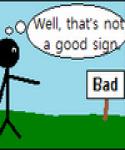
Get your pet prayed or nuetered.
This Sunday, 2pm, at Lafayette Church (sorry about the bad near-pun)

Permalink: Get_your_pet_prayed_or_nuetered_.html
Words: 15
Category: religion
07/16/08 05:11 - ID#45038
Spending time in the village
Well, actually, I will start with last night, just to set the stage.
Last night, I went to the concert on Bidwell, and it was a great night. I saw one great person after another, had a beer, enjoyed some great and listened to some fantastic music. Even when I collected cash on behalf of the Elmwood Village Association, all I had to do was walk with the bucket, and people yelled at me to come collect the money. Everybody was eager to give.
Frankly, that's what I love about the neighborhood. Everybody is nice, generous, tolerant, friendly. I love living here, mostly because of the people ((e:strip) people included).
Which brings me to today's experience. I was hanging up fliers for the upcoming film, "Lord, Save Us from Your Followers."
Now, the basic point of this movie is that Christians need to be a lot nicer than we are right now. It asks, "Why is the Gospel of Love dividing America?" and basically admits that it is because Christians have dropped the ball.
For most of the afternoon, people were curious about the flier, but willing to put it up. I never asked any business owner that didn't already have fliers up, and I was, of course, extra nice and friendly.
A few people politely declined, or said, "why don't you give it to me and I will hang it up," which often is a nice way of saying, "I am going to read this over and likely throw it away," but at least it is being said nicely. In these cases, I said thank you, have a good day, and moved on.
One guy, however, before I could even put the flier in his hand, who's shop was COVERED in other promotional materials said, very sternly, "no. The owner told me not to hang that one up." It was almost aggressive, especially since I had been in the stop a few times before, and that same guy was always very cool. We had hung out and talked other times I visited, but this time--stonewall.
So I told him that if the owner had questions about the movie I would be happy to talk to him, and I got a short--"ok." With a "get out of my otherwise empty store, I don't want to speak to you" look.
I got mad at the guy (not saying I should have, just saying I did), but did my best to smile and say thank you and leave.
As I continued my journey down Elmwood, I realized a couple things:
1. Christians have done this exact same thing to other people for years. I've probably given people the exact same look. So turnabout is fair play.
2. Because Christians have behaved badly for a long time (and will continue to do so, in all likelihood,) I will have this experience more and more if I continue to follow Jesus and interact with non-Christians (which I do think I will do--I like both).
3. It does hurt to be rejected, especially out of hand. As a straight, white, middle-class man, it doesn't happen to me as much as some other people. I probably need to experience it more, if only to better relate to those that do.
4. If Christians are ever going to make a difference in the world (and I really do believe that the way of Jesus brings healing to neighborhoods and the world, when it is attempted), we are going to have to develop the discipline to endure things like this over and over and over again. People have been hurt by Christians and they will react to us with anger. The only way to bring about healing is to meet that anger with love--absorbing anger/hate again and again, but not responding likewise.
Maybe I will share more thoughts later. I have to go running now.
Permalink: Spending_time_in_the_village.html
Words: 669
Category: religion
07/13/08 11:14 - ID#45012
The writing of the Bible
- That the story of Jesus was accurately told orally for a hundred years.
- That the hundreds of contradictory written fragments and letters from the time after that don't matter, because:
- The editing process to sort everything out was also guided by God, again, indirectly.
- That the Gospels were then transmitted down with no textual errors in copying or translation thereafter, thanks to God, indirectly.
- That the parts of the Bible and the Gospels that don't make sense don't contradict any of the above.
This post will attempt to deal with all of the above items, taken from (e:jim)'s list of "things one would have to take on faith" to be a Christian.
The story of Jesus was passed down orally for some time before the gospels were written down. However, it seems that at least Matthew Mark and Luke were written before the year 72--so there was maybe 30 years, tops. (For the relationship between Matthew, Mark and Luke, see: (WIKIPEDIA - http://en.wikipedia.org/wiki/Synoptic_gospels)
I base this on the fact that Luke was written as a two-volume work with the book of Acts--they make this clear in the first chapters of each book, and are consistent in language and themes. Anyway, one event that occurs in Luke is Jesus predicting the destruction of the Temple.
We know from history that this indeed did happen, in the year 72. The book of Acts, which follows the apostles and the early church follows Paul as he heads to Rome, which takes us further down the path of history, but not all the way to the destruction of the Temple.
Oddly enough, many scholars take this as evidence of Luke being written after the destruction of the Temple, due, in part to a bias against "supernatural knowledge" (i.e. "Jesus could not have predicted the future") This is bad logic, in my opinion, on two fronts. One: if Jesus was who he claimed he was, this prediction is certainly possilbe, and two: it wasn't THAT hard a prediction to make, given the political climate at the time. Divine revelation was not necessary to figure out that the Jews would rise up and the Romans would act destroy the Temple in retaliation.
It would have made sense for the author of Acts to include this prediction coming to pass, but he did not. Therefore, I conclude that Luke was likely written before 72. For more, see: (WIKIPEDIA - http://en.wikipedia.org/wiki/Gospel_according_to_Luke#Date)
(There you will see that my opinion is the minority opinion, but the latest possible date is around 150.
100 years is a long time for something to be passed on orally in todays culture, but things were different in oral cultures.
Anyway, after the oral period of transmission (and Paul's letters are generally dated earlier than the Gospels), the stories were, in fact, written down.
You would have to have a lot of faith to think that there was no error in the recording (by today's standard, at least) because one does not need outside "fragements and letters" to find contradiction (although the small amount of "other" material that talks about Jesus came much later, was discusssed, and dismissed as unreliable). All of the contradictions needed to dismiss a strict literalism is right there in the Bible!
Rather than "get the story straight," those that put together the Bible included all of the differences. There is not one story of Jesus, but four!
What we find is not a historical account, by todays standards, but a collection of a number of different witnesses, and perspectives. This does not make it easy to put together a strict, blow by blow biography, but we do have greater reliability where the different sources agree. The variation in the accounts actually demonstrates them to be more dependable--it shows that there was no collaboration, but different people telling the story the way they best could. Even if four of us had witnessed an event yesterday, it is unlikely that all of us would give the same account.
Do we have to believe that God was involved in the editing process? No more than we would for other historical documents. There are plenty of early manuscripts, as well as early translations and references in other works.
There is no assertion IN the Bible that God specifically guided the editing. No such assertion is needed for the translation, due to the preponderance of early material. While there is some variation, it is small, and in most good academic translations (I like the NRSV), it is noted in the footnotes .
The idea of "innerancy," strangely enough, is an idea that is foreign to the Bible. The Bible itself makes no such claim, and it is not necessary. If we take the texts of scripture (and the others that aren't included) and look at them just as any other historical documents, enough truth will emerge enough to understand who Jesus was, the basic facts of his life, and what he taught. There is also plenty of evidence for his resurrection, which is really the ultimate test, and will have to wait for another post.
Permalink: The_writing_of_the_Bible.html
Words: 864
Author Info

Date Cloud
More Entries
My Fav Posts
- This user has zero favorite blogs selected ;(
 Buffalo Pride weekend marathon
 Raggedy Annie Plushapalooza '96
